

Keyword research is the backbone of every successful content marketing strategy. It’s the process of identifying and analyzing the words and phrases that people type into search engines. When done properly, keyword research provides powerful insights into what your target audience wants, allowing you to create content that meets their needs and ranks well on search engines.
In today’s digital world, publishing content without keyword research is like sailing without a compass. You might be creating high-quality articles, but if they’re not optimized for the right keywords, they won’t reach your intended audience. Keyword research helps you discover the exact terms your customers are using, so you can align your content with their search intent.
By strategically using keyword research, you can drive more organic traffic, enhance user engagement, and improve your brand’s online visibility. This article will walk you through step-by-step techniques on how to use keyword research for a strong and result-oriented content strategy.
Table of Contents
Understanding Keyword Research

What Is Keyword Research?
Keyword research is the process of discovering the search terms that people use when looking for information, products, or services online. These keywords reveal what users are thinking, their interests, and the problems they are trying to solve. By understanding these patterns, content creators can design articles, blogs, and landing pages that match user intent and appear in search results more often.
Tools like Google Keyword Planner, Ahrefs, SEMrush, and Ubersuggest provide essential data such as search volume, competition level, and keyword difficulty. This data helps marketers choose the most relevant and achievable keywords to target.
Why Keyword Research Matters for Content Strategy
Keyword research ensures your content has purpose and direction. It connects your brand’s message with your audience’s needs. Without it, even great content can go unnoticed. By identifying trending and low-competition keywords, you can create content that not only ranks higher but also resonates with readers.
Moreover, keyword research reveals content gaps—areas your competitors might be overlooking. By addressing these topics, you can fill those gaps and establish authority in your niche.
Steps to Perform Effective Keyword Research
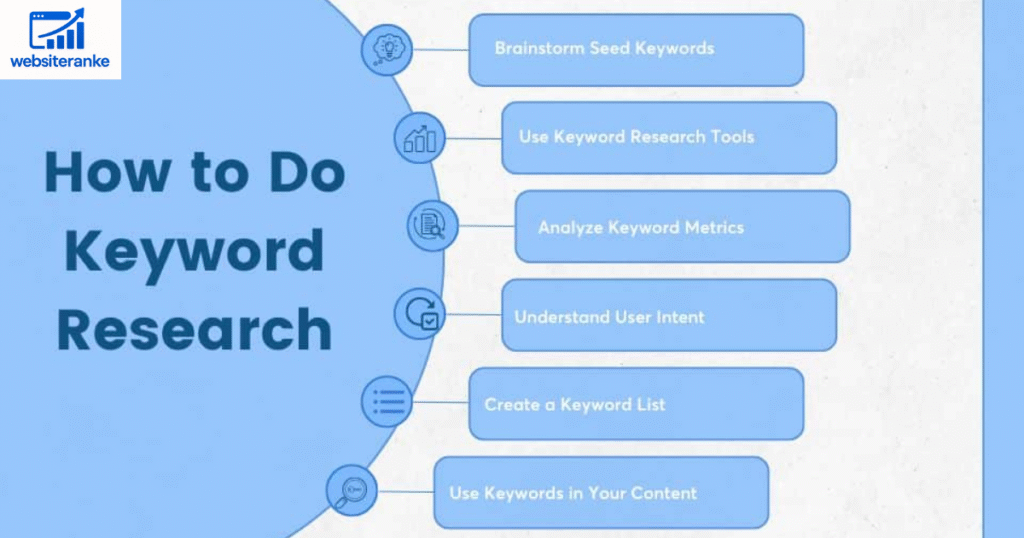
Define Your Audience and Goals
Before starting keyword research, clearly identify your content goals and audience. Are you writing to inform, sell, or build awareness? Defining your target reader helps you understand the type of content they are searching for. For example, a fitness brand may focus on users searching for “home workout plans” or “diet tips for beginners.”
Creating audience personas—based on demographics, interests, and pain points—helps you focus on relevant topics. Once you know who you’re writing for, keyword research becomes more targeted and effective.
Use Keyword Tools to Gather Data
After defining your audience, use keyword research tools to generate a list of potential keywords. Tools like Google Keyword Planner, Ahrefs, Moz, and KeywordTool.io allow you to find search volume, keyword difficulty, and related phrases.
Focus on a mix of short-tail keywords (broad, high-volume terms) and long-tail keywords (specific, low-competition phrases). For instance:
- Short-tail: “content marketing”
- Long-tail: “how to use keyword research for content marketing strategy”
Long-tail keywords are more precise and usually convert better because they match user intent closely.
Turning Keyword Research into a Content Strategy

Organize Keywords into Clusters
Once you have a list of keywords, organize them into related groups or topic clusters. A topic cluster is a group of connected keywords that revolve around one central theme. For example, if your topic is “SEO,” your clusters might include:
- Keyword research techniques
- On-page SEO strategies
- Link building methods
Each cluster can have a pillar post (a detailed guide) and several supporting articles targeting related long-tail keywords. This structure improves your website’s authority and helps search engines understand your content better.
Map Keywords to the Buyer’s Journey
Every user goes through different stages when searching online—awareness, consideration, and decision. You should map your keywords accordingly:
- Awareness stage: Informational keywords like “what is keyword research.”
- Consideration stage: Comparison keywords like “best keyword research tools.”
- Decision stage: Transactional keywords like “buy keyword research software.”
By creating content that matches each stage, you can guide your audience smoothly from learning to purchasing.
Optimizing Content with Keywords
Use Keywords Strategically in Your Content
After selecting keywords, use them naturally in your content. Place your primary keyword in key areas such as:
- The title (H1)
- The first 100 words
- Subheadings (H2, H3)
- Meta description
- URL slug
- Image alt text
Avoid keyword stuffing—overusing keywords unnaturally can harm rankings. Instead, focus on providing value and context around each keyword.
Measure and Refine Your Keyword Strategy
Keyword research isn’t a one-time job—it’s an ongoing process. Use analytics tools like Google Search Console and Google Analytics to track performance. Monitor metrics such as keyword ranking, click-through rates (CTR), and user engagement.
If a particular keyword isn’t driving traffic, refine your content, adjust your keyword focus, or explore emerging trends. Regular updates help your content stay relevant and competitive.
- Always research keywords before writing any content.
- Understand user intent behind each keyword.
- Use both short-tail and long-tail keywords for balance.
- Cluster related keywords into topic groups.
- Continuously monitor and update your keyword strategy.
Faq’s
What is the main goal of keyword research?
The main goal is to understand what your audience is searching for and create content that matches their intent.
How often should keyword research be done?
It’s best to update your keyword research every 3–6 months to stay aligned with search trends.
Can I do keyword research for free?
Yes. Free tools like Google Keyword Planner and Ubersuggest provide basic but valuable insights.
Should I focus on long-tail or short-tail keywords?
A mix of both works best. Long-tail keywords bring targeted traffic, while short-tail keywords help build visibility.
Why isn’t my keyword-optimized content ranking?
Ranking depends on multiple factors—content quality, backlinks, page speed, and competition—not just keywords.
Conclusion
Keyword research is more than just finding popular search terms—it’s about understanding your audience’s behavior and intent. By using keyword insights strategically, you can craft content that’s relevant, engaging, and optimized for search engines.
When integrated into your content strategy, keyword research helps you plan topics, structure your website, and connect with users at every stage of their journey. It builds a foundation for long-term SEO success and brand authority.
Keep refining your strategy, tracking results, and adjusting based on data. Over time, consistent keyword research and smart content planning will transform your website into a valuable, traffic-generating resource.
Read more article on websiteranke